Sunday, 26 May 2013

A Gay Man Killed on New York City Streets


On May 18, 2013 a thirty-two year old homosexual man, Marc Carson, was gunned down on the streets of New York City. At around midnight Carson was walking with a friend in Greenwich Village when he was approached by Elliot Morales and two other Hispanic men. 

Morales was an armed bigot who made several homophobic comments towards Carson. Carson ignored the offencive homophobic comments and continued walking. One of the Hispanic men left while Morales and the other man followed Carson and his friend. 

Morales asked Carson if he wanted to die on the streets then he grabbed his revolver and shot Carson in the cheek. A bouncer at a club nearby, who witnessed the murder, said Carson fell to the ground after being shot. Carson was rushed to Beth Israel Hospital and died. 

Morales ran away from the scene. Police caught Morales who confessed to the crime. Morales is charged with murder and criminal possession of a weapon. Morales had a fake ID and refused to identify himself or be fingerprinted. 

There are many questions and concerns about this case. For instance, what was Carson’s friend doing while Carson was shot? Why wasn’t Carson’s friend shot? Was this a hate crime or is Morales psychotic? 

These questions are not easy to answer. Morales also claimed to be the Newtown, Connecticut killer. Before Morales shot Carson he urinated in front of a club. When the bartender confronted him, Morales said he was the Sandy Hook shooter and if the bartender called the police he would shoot him. 

Morales anti-gay comments suggests the murder was a hate crime. Morales targeted Carson because he was a homosexual man. Carson was wearing a tank top, cut off shorts, and boots. Morales inferred Carson was gay based on his outfit. 

Even if there were other motives for Morales to murder Carson, his primary motive was Carson’s sexuality. This case greatly effects the homosexual community. Homosexuals walking around late at night need to be cautious. 

This case is disheartening because there are still people that are homophobic and will act in violence against the gay community. How will the homosexual community respond to this act of violence? Will there be stricter gun laws because of this incident? How can we ensure the safety of the homosexual community and any other marginalised group? These are all questions that will hopefully be answered from this case. 

1. http://www.nytimes.com/2013/05/19/nyregion/killing-in-greenwich-village-looks-like-hate-crime-police-say.html

The Political Economy of the Media and Investigative Journalism


During our last lecture of the semester, we discussed the political economy of the media and investigative journalism. The media represents our choices and values which varies between countries. For instance, the media in Australia demonstrates a capitalist democratic society while in China the media is heavily regulated. 

The owners of the media shape the values expressed. In the United States and Australia the media is owned predominately by white middle aged men. Therefore, other ethic groups, ages, religions, socio-economic classes, and sexes aren’t represented in the media. The representations of other groups in the media are from the perspective of middle aged white men. 

Politics and the media influence each other. The media has a large impact on elections. For instance, in the first televised election between John Kennedy and Richard Nixon appearance on television played a large role. Nixon did not wear make up and was released from the hospital a few days before the debate. Nixon looked worn out and Kennedy, who wore make up looked young and vibrant. The polls showed people watching the debate thought Kennedy won and people listening to the debate thought Nixon won. The fear of not performing well and appearance on television intimidated presidential hopefuls and it was sixteen years before another debate was televised. This is an example of media platforms having an influence in politics. Politicians rely on the media to deliver messages to the public.
Clip from the 1960 Presidential election. 

During the lecture we discussed investigative journalism. I am very interested in the area of investigative journalism because the public has a right to know about issues that are harder to report on than news stories on topics such as crime. Investigative journalism requires in depth research on a particular topic. 

When I hear investigative journalism I think about early investigative reporting and muckrakers such as Upton Sinclair, the author of The Jungle. The impact of investigative journalists such as Upton Sinclair changed society and journalism. The Pure Food and Drug Act of 1906 and the Meat Inspection Act resulted from public pressure after reading The Jungle. 

Investigative reporting takes time and patience, but I believe it is worthwhile. I aspire to have an impact on society and reveal the truth about certain topics. Investigative reporting is important for society and serves the public interest. Sinclair inspires me to find a story, investigate, write and hopefully have a large impact on society. 

Monday, 20 May 2013

The First Ag-Gag Prosecution


Amy Meyers, a woman from Utah, used her cellphone to take videos of cows being slaughtered at a meatpacking company in Draper City, Utah. Meyers was changed with agricultural operation interference.

The recording of agricultural operations while trespassing or under a false pretence is against the law under the new “ag-gag” law. Meyers is the first person prosecuted under the new “ag-gag” law. 

Meyers claims she was standing on public property while video taping the cows, therefore she would not be in violation of the “ag-gag” law because she did not step foot into the meatpacking company. 

After video evidence showing Meyers standing from public property was given to the prosecutors, the case was dismissed.

Meyers case only gained media attention after Will Potter blogged about her case and posted about her story on Reddit. 

Meyers is an animal rights activist and even though her case was dismissed, there might be a chilling effect as a result of her prosecution. Even though Meyers was on public property she was still taken to court, other activists might not be willing to risk their freedom to take a video of slaughterhouse conditions. 

The conditions in slaughterhouses are already intolerable, and those owning slaughterhouses knew there could be a possibility their actions could be recorded. The “ag-gag” law gives slaughterhouse owners too much power. How will be know the conditions of slaughterhouses if we are not able to record the practises? How will corruption in the meatpacking industry be revealed? 

There is great public interest about the conditions of slaughterhouses. Journalists and activists are not being given freedom of speech. First Amendment rights are being jeopardised and journalists are not able to properly report on injustices in the meatpacking industry. This law is helping to protect the meatpacking industry. 

This law might encourage other industries to demand special protections from their practises being exposed to the public. This case is important for the future of journalists and activists. How are journalists going to report on news if they are afraid of being prosecuted? Journalists are supposed to be “watch dogs” and this law disables journalists from being able to properly carry out their job. 

Hopefully, journalists and activists will be able to find new ways of obtaining their information that will not cause them legal problems. 

1. http://myveganjournal.com/wp-content/uploads/2013/04/ag_gag_poster.png

2. http://www.opednews.com/articles/First-Ag-Gag-Prosecution-by-jana-claire-130429-452.html

Is Lila Carney the Best New Addition to Quinnipiac?


After meeting Lila Carney on three separate occasions, its not hard to see she is an optimistic, enthusiastic and bubbly new addition to the faculty at Quinnipiac University. 

Carney is not new to the world of journalism. Carney knew she wanted to work in the communications field from a young age. 

“Growing up I was always kinda a news nerd and watched the evening news every night at dinner” said Carney. 

Carney has an impressive work history. She interned as an assignment editor at NBC. 

Later, Carney became a reporter and worked as one man band in broadcast journalism. Carney said that this job was stressful because she had the responsibility of three people. 
When Carney was a reporter she covered numerous local stories. Her stories included anything from an honourable citizen rescuing a dog to a murder case.

Recently, Carney worked as a professor at the University of Connecticut. Carney likes to work in the education field because she can “keep her feet wet in journalism.”

At the university Carney is the assistant director for social media, teaches journalism 160 and the introduction to media studies, is a member of the academic integrity board and is affiliated with numerous organisations at Quinnipiac. 

Amanda Shulman is sophomore at the university and the photo editor of the Chronicle. Shulman works directly with Carney and describes her as “awesome, dedicated, and caring.” 

“I wish I could take her class, I feel like she would be an awesome professor,” Shulman said. 
Jamie DeLoma describes Carney as “a pleasure to work with.” 

Last week DeLoma taught Carney’s class about AP style. Deloma and Carney are both AP style enthusiasts.

DeLoma would love to teach a joint class with Carney. DeLoma said the best classes are the ones with two professors, because you get two different perspectives on life. 

Carney is very personable and is prepared to help guide her students. Carney’s best piece of advice is to “be a sponge” and willing to learn. 

Carney plans to work at Quinnipiac for several years. In the future she wants to return to news reporting. 

Friday, 3 May 2013

Ethics in Journalism


This week during lecture we discussed ethics in journalism. Ethics is a controversial issue because everyone has their own personal ethics. Since journalists do not need a license to practise journalism, ethics becomes important for a journalist’s credibility. Many credible journalists join groups such as the Media Entertainment and Arts Alliance in Australia. 

I believe there should be a set of ethics for journalists. In order for journalists to serve in the public interest there needs to be credible and ethical journalism. When journalists are very unethical there is public backlash, but there are no serious consequences for the journalist. 

Some people would be willing to take photos of a person about to cause themselves harm instead of trying to intervene in the situation and help the person. Journalists have a responsibility to report on stories that are of public interest, but this does not mean that journalists can forget about their morals. Morals differ for each person, but I do not believe a story is worth a human life. 

During the tutorial our class discussed certain cases in which journalists were faced with a dilemma. In one instance, two photographers watched and filmed a man setting himself on fire. After thirty-seven seconds one of the camera men helped the man while the other camera-operator continued to film the situation. Since I was not in the situation it is hard to say exactly the steps I would have taken, but I would like to believe I would have helped the man. 

I do not understand how people can distance themselves from other humans in order to complete a job and write a story. I would feel incredibly guilty if I watched another being suffer and did not try to help. 

I believe there should be some guidelines for all journalists. Journalists should intervene in situations that are life-threatening. Their job as a journalist does not override their ability to help others. Although journalists are not trained paramedics or humanitarians, if they are witnessing a situation in which they could help, they should stop writing the story and help the victim. 

As an aspiring journalists I was shocked by some of the case studies and for some I was pleasantly surprised. When I am a journalist I will try to be compassionate and help others while still being able to report stories. 

The Stress and Trauma Journalists Face


During our journalism lecture we discussed war reporting and trauma in journalism. Before this lecture I did not realise that journalists experience trauma or post traumatic stress disorder from certain stories they have covered. 

Journalism is an undervalued profession. Journalists expose injustices to the public, are constantly on the job, and have to report on disturbing situations. Journalists report stories for the public and most people do not respect and even despise journalists.  

As a journalist, you have to be willing to accept all of the positive and negative aspects of your job. Not all people will appreciate the value of the work that journalists do, but it is an important task that needs to be carried out in society. 

Sometimes as a journalist there will be times when your boss will ask you to report on a war or a dangerous situation and you have to be willing to say no. There is no shame in saying no to reporting a story you are uncomfortable with. If you are not mentally stabile to report on a story that might cause trauma it is not worth risking your own sanity. 

After hearing about the story of Kevin Carter, an award winning South African photojournalist. Carter had an extremely hard life after joining the Air Force, then becoming a disc jockey at a radio station, and finally deciding to become a photojournalist. Cater had experimented with multiple types of drugs. 

As a photojournalist, Carter had seen many traumatic events. He started to experience post traumatic stress disorder aside from his other drug issues. He took many disturbing pictures while he was a photojournalist which had a very big impact on his mental state. He was unable to cope with the trauma he was facing and committed suicide.

As a journalist it is important to confront issues of trauma or post traumatic stress disorder. Traumatic situations are hard to talk about but journalists need to talk otherwise the past might haunt them. 

When I become a journalist I will not be a war reporter, but if I am reporting on a situation in which I feel is traumatic I will seek help. After watching a video in class about journalists that have been treated for their post traumatic stress, it is more important to deal with mental issues than care about your image or being perceived as weak. 

Thursday, 2 May 2013

The Boston Marathon Bombings


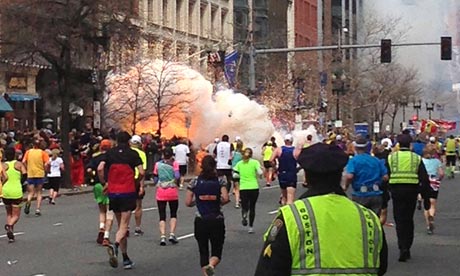
On Patriots Day, April 15, 2013 two bombs went off at the Boston Marathon. Three people were killed and over 144 people were wounded. Many people lost their limbs as a result of the attack. 

Obama vowed to find the people responsible for the attack and these people would “feel  the full weight of justice.” As a response to the attacks on Boston: Washington D.C., New York, Los Angeles, and all other major United States cities were under red alert and security was tightened. 

When I first heard of these attacks I was in the Refect on James Cook University campus. I saw the television out of the corner of my eye and through all noise in the Refect all I heard was Boston. I walked closer towards the television to find out Boston had been attacked. 

I quickly rushed back to my room and researched new articles to find out the specifics about the attacks. Then I called my friends in Massachusetts, hoping none of their friends and family were at the Marathon. Luckily, all of my friends and their family’s were safe. Then I called my family to make sure there were not any attacks in New York. Thankfully, all of my family and friends were able to stay safe during the attacks. 

I was really upset about the attacks because I was reminded of the tragedies of September 11. I was only in the second grade, but I remember that day very clearly. Every child was being sent home. For the children whose parents worked in the World Trade Centre, they were called in the principles office to wait for a family member to pick them up. 

Thankfully, the Boston Marathon bombings did not have as many civilian casualties as September 11. Instead, these bombings caused fear in society. People do not feel safe going to large public gatherings because their safety might be at risk. 

After locking down the city of Boston, police found the two Russian bombers after they were causing more chaos in Boston. Apparently the two Russian bombers were on their way to New York. 

This attack hit very close to home. Many of my friends are from Massachusetts and I have been to Boston countless times. I have never felt unsafe in the city of Boston, but after these attacks I will be more cautious in large public gatherings in cities. 

A Day in the Life of James Schilkowski


Do you ever wonder who does the: laundry, purchasing, inventory, collection and distribution of athletic equipment at Quinnipiac University? James Schilkowski performs these tasks on a daily basis, he is the equipment manager at the University. 

Schilkowski started working at Quinnipiac in September 2009. He chose Quinnipiac because of the good working conditions and friendly staff. 

Schilkowski wears jeans and a t-shirt to work everyday. Schilkowski might look intimidating, but he is very friendly and easygoing. 
“There really isn’t a whole lot you can do to make me mad,” said Schilkowski. “One thing that does make me angry is when people don’t do their job or do it wrong.” 

There are only a few things in his small office. His office is plain white with only a computer and phone. Schilkowski lives a simple life. 
Schilkowski works on the weekends and has only had 6 days off since August. When the sports teams are playing he needs to be working. “My life is my job and my job is my life” Schilkowski mumbled unenthusiastically.  

Normally, Schilkowski’s day consists of: overseeing his workers in the laundry room, office work, setting up different sports teams with the right equipment, sharpening skates, monitoring practice, and going to the Mount Carmel Campus to check on the laundry. Every day is different it depends on the sports teams schedules.

Cemi Abreu, the athletic trainer for men's basketball at Quinnipiac, works with Schilkowski on a daily basis.  
“Jamie is a hard-worker, committed, and has a great sense of humor” Abreu said. Abreu said that Jamie is very talented and is excited to see what Schilkowski will offer Quinnipiac.

Ashley Smolar, a freshman at the university, works for Schilkowski in the Athletic Centre Laundry room on the Mount Carmel Campus and the York Hill Campus. 

Smolar does the laundry for the sports teams. She said that it might sound like a disgusting job but Schilkowski makes work enjoyable. 

“It is hard to find Schilkowski on a bad day, but if he is having a bad day its probably because of a problem with an equipment order” Ashley said. 

Jamie is dedicated to his job and making his employees happy. “He is always understanding if you can’t work or want more hours,” said Smolar. 

Smolar plans to work for Schilkowski again next year because of his work ethics and lighthearted attitude. Schilkowski dedication makes him a great asset to the Quinnipiac Athletics Department.

Photojournalism


Wednesday, 10 April 2013

The Rule of Thirds and Bad News Photos


In tutorial, we discussed picture stories. Before taking this class I did not know about the rule of thirds. The rule of thirds is when you take a photo using a digital or camera phone, you can either imagine a grid of three vertical and three horizontal lines or you can find a setting to make a grid on the screen. To make a photo more interesting, you should place your points of interest on the intersecting lines. I find this photography concept very interesting, because your eye is drawn to these points of interest. 


Today during class, each class member found an example of a news story with a bad photo based on the rule of thirds or relevance. I found the task to be easier than I had imagined. I found a story titled “Gunman holding fireman hostage killed; hostage OK.” The picture above is associated with this story and is a blurry, unfocused shot of a line of cars. If I was just looking at this picture I would not have known there were hostages being held. If I were the journalist I would have tried to capture a clear shot of the hostages coming out of the house. As a journalist it is important to capture a picture that tells the story. The picture should not be an after thought. 


Another article I found titled “Guess who is not coming to dinner?”, this article describes President Obama’s dinner with the GOP senators at the White House. The picture above is associated with the story and depicts President Obama giving a speech. If I were the journalist covering this story, I would have tried to take pictures at the event. I would try to capture a picture that is relevant to the story. I would have taken a picture of Obama and the GOP senators at the dinner table. In an ideal world I would be able to gain access to the event and capture pictures, if not I would try to capture a picture of the GOP senators entering or leaving the White House while being greeted by President Obama. 

When I am a journalist I will take pictures that will bring meaning to the story. For lecture recess I have plans to go to the Whitsunday Islands and Melbourne. I will be taking many photos this weekend. I plan taking pictures based on the rule of thirds this weekend to try to find a great story. I will have to think about other elements such as framing, focus, angle, exposure, timing, and capturing “the moment.” These elements will guide the photos I will be capturing.

Should Taping Farm Animal Cruelty Become Illegal?


There are many abuses occurring in United States farms and slaughterhouses. One of the best ways to prevent abuses is for owners of farms and slaughterhouses to know there is a possibility that one of their workers might secretly be taping their every move. 

Instead of states making animal cruelty illegal states including Iowa, Utah, and Missouri have created laws which make the taping of animal abuse illegal. Indiana and Tennessee are expected to vote on similar laws in the coming weeks. The Indiana bill is considered very controversial with labour groups and the state press association opposing the bill. 

The videos taped by animal rights activists spark change and farmers feel the consequences for their mistreatment of animals. In some cases large businesses buying meat from farms with awful treatment of animals will find a new farm to buy from with better farming practises. McDonald’s refused to buy any meat or egg products from a Wyoming farm because of a video released about their cruel practises. McDonald’s later said the video played a role in their decision to find a new supplier. Farmers are hurt economically by these videos. 

Many state legislatures seek to make taping animal abuses and applying for a job without telling of affiliations with animal rights groups illegal. The American Legislative Exchange Council is a business advocacy group comprised of many representatives from farm states. Officials from the group play a large role in creating model bills to protect farmers. 

The new possibilities of activists being sentenced to jail time has caused a chilling effect. The First Amendment should guarantee activists the rights to free speech, instead state legislatures are punishing people for uncovering injustices in the American food system. 

Don Lehe, an Indiana Republican State Representative said farmers are shown in a false light when videos of animal cruelty are posted on the internet. Lehe said farmers are not able to redeem themselves and the practise of taping animal treatment is unfair. Farmers and livestock companies believe the videos shown are not about making conditions better for animals, instead activists are trying to persuade the audience to stop eating meat. 

Animal rights activists have currently been pushed out of states with laws making the taping of farming practises illegal. Activists have to find new creative ways to obtain the information they need to expose cruel farming practises. The videos gathered by activists have played major roles in exposing injustices. If activists are not able to film farming practises the public will remain ignorant about the origin of their food. 


Thursday, 4 April 2013

Learning the Three Act Style of Writing


During tutorial on April 4, 2013 my class discussed the ways to write a story in a three act style. Writing in a three act style is very different from writing a story in an inverted pyramid style. To write in a three act style first a journalist must find a way to hook the reader in either by using mystery, the unexpected, contrast, etc. Then a journalist must use logic and structure to construct the middle of the story. At the end a journalist has to find a way to link the ending of the story back to the beginning. 

 Our professor, Marie, gave us an assignment to interview a classmate and write a 500 word feature. This assignment is going to be challenging. First I have to interview a fellow classmate and obtain enough information about them to be able to write 500 words. Then I need to find the angle of my story, since I don’t have enough information, due to time constraints, about my interviewee I need to send her some questions in an email. After I need to write the feature story in a three act style. 

In my previous journalism class, I did not write many feature stories. I have mainly written news stories in the inverted pyramid style. This assignment will test my journalistic abilities to write in a different style. 

I enjoy the inverted pyramid style because there is more structure than in the three act style. The three act style is a circle and this concept is difficult for me to grasp. 

Before I begin my assignment I need to research different feature stories that use the three act style. I will look at features other journalists have written to understand how to write in this style. In the inverted pyramid style there is hardly ever an ending, it will be difficult for me to connect the ending back to the beginning. 

I am very interested in learning about this new style of writing. To become a better journalist it is important to understand different writing techniques. Hopefully, I will be able to master the three act style. 

I am excited to hear the stories fellow students will write. Hopefully, I will be able to learn from the constructive criticism of their assignments. After I am able to master the three act style I will post a feature story on my blog. 

Wednesday, 3 April 2013

Drones Used in Australia to Spy on Livestock Conditions


Animal Liberation, an Australian animal rights group, plans to use drones uncover livestock conditions on private property. Animal Liberation plans to hover the drone over free-range egg and cattle farms to uncover abuse. The drone looks similar to a helicopter and has six-blades. 

Farmers are unhappy with Animal Liberation’s plans to look into their farms. Fiona Simson, the new president of the New South Wales Famers Association, said the drones are an invasion of privacy. Farmers have a high animal welfare standard, and believe it is unnecessary to look into the treatment of animals on the egg and cattle farms. 

Mark Pearson, the executive director of Animal Liberation, said the treatment of animals in the farms are in the public interest. Since Pearson is using drones and is not walking into the farms he is not breaking any trespassing or privacy laws. Pearson said since the treatment of animals is of public interest it is not an invasion of privacy. 

In the past couple of months there has been discoveries across Europe of horse meat being used in beef products. Public interest in their consumption of meat and the treatment of animals has increased because of the contaminated meat in Europe. Animal Liberation wants to ensure Australians that their meat is being produced humanely and there is not any corruption in the cattle farms. Animal welfare is a major issue currently in politics, Animal Liberation is ensuring animals are being treated fairly.

Different associations related to the meat industry in Australia do not believe the drones will last long. The president of the Northern Territory Cattleman’s Association, David Warriner said the majority of Australian farmers follow the regulations and rules associated with animal welfare. 

Warriner believes farmers might shoot their guns at the drone. If farmers decide to shoot at the drone this will cause many safety issues. Warriner said having noisy drones flying over the cattle will frighten them. Many farmers believe using drones to spy on their farms is excessive and unnecessary. 

This is not the first instance in which drones have been used to uncover animal welfare in the meat industry. The United States in the past has used drones which resulted in an investigation of a meat packing plant in Dallas, Texas. If Australian citizens want to find out the truth of the practises employed by cattle and egg farms, the drones are a good way to legally discover the treatment of livestock.

1. http://www.onegreenplanet.org/news/australian-group-plans-to-use-drones-to-fight-animal-abuse/

2. http://www.heraldsun.com.au/news/national/animal-liberation-spying-drones-attract-ire-of-farmers/story-fncynkc6-1226609953499

Saturday, 30 March 2013

No Verdict on Proposition 8


After reading several articles about the Supreme Court hearings on Proposition 8, a decision has yet to be made. The Court still has to rule whether the issue of Proposition 8 should be held in the Supreme Court or if it should be decided by the District Courts. If Proposition 8 is found to be decided by any of the lower courts, then the District Courts ruling rejecting Proposition 8 will be in effect. 

From the actions and discussions in the courtroom many people believe the four, more liberal Justices don’t believe Proposition 8 is constitutional and the four more conservative Justices don’t want to overturn Proposition 8. Justice Anthony Kennedy and Chief Justice John Roberts who will decide whether Proposition 8 will be considered constitutional. Most people believe Justice Anthony Kennedy will be the deciding vote in the case because in two previous significant same-sex cases he was the deciding vote. Many gay rights activists are hoping Justice Anthony Kennedy will vote in favor of equality. If Chief Justice John Roberts votes in favor of equality, this would be a very significant win for gay rights activists. 

The decision stemming from the Supreme Court will have a major impact across the United States. Currently there are nine states allowing same-sex marriage, representing sixteen per cent of the American population. California is one of the most populated areas in America representing twelve per cent of the American population. If California allows same-sex marriage the amount of people able marry their significant other would be almost doubled. The decision in California might influence the decisions made in other states that are on the verge of allowing same-sex marriage. The decision in California will impact the future of same-sex marriage rights. 

The Supreme Court has been known to take their time with major decisions. Currently, many journalists are analysing the arguments made in the oral cases and the reactions by the Justices. We are unsure whether the Supreme Court’s final decision will be in favor of same-sex marriage, against marriage equality and in favor of Proposition 8, or if the Justices will decide this case is an issue to be dealt with by the lower courts. There is much speculation as to the outcome of this landmark case, but this decision will take time because of the repercussions of the decision. 

1. http://www.newyorker.com/online/blogs/newsdesk/2012/07/john-roberts-supreme-court-gay-marriage-cases.html
2. http://www.huffingtonpost.com/nathaniel-frank/can-you-oppose-gay-marria_b_2973816.html

Agenda Setting in Journalism


This week in tutorial we discussed agenda setting in journalism.The way the media can influence which topics the public focuses on is very interesting. The angle of a story depends on the agenda set by the media.

Since I am from the United States I found it interesting the way the media in Australia portrays Aboriginals. Previously I have heard negative stories of Aboriginals from Australians. After learning the way the media negatively portrays stories about Aboriginals, I understand the power of the media’s agenda. 

Currently I am taking Australia People: An Introduction to Social Science, and I have learnt about the history of Aboriginals. There have been many guest speakers in our class discussing the hardships of being Aboriginal, and the media is only perpetuating stereotypes. As a journalist it is important to understand how powerful your agenda is and the impact your agenda will have on the opinions of the public. 

In all forms of media there is an agenda set. For example, in tutorial we spoke about the ways American movies set an agenda. As an American, I never realised there was an agenda set. After hearing examples from fellow classmates of movies which have an agenda, such as Saving Private Ryan, I can now see the agenda. Yesterday I watched a few American movies and I could see the agenda set in the different movies. 

There are people that form their opinion by the agenda set in movies and other media outlets. It is dangerous for some members of the public to form their opinions based on a media product with an agenda. The best way to form an opinion is by using various media outlets and exploring both sides of the issue and to make a decision based on the information you have researched.

I am very interested in learning about the ways the media sets the agenda in order to benefit their own interests. Agenda setting occurs in the United States with many social issues including same-sex rights, abortion, health care, the financial deficit, gun laws, and many other controversial topics. I used to believe that journalists were supposed to be incredibly objective and agenda setting tactics were used by public relations professionals. I am surprised to learn and be able to recognise agenda setting tactics used by journalists. Maybe one of the issues with journalism today is the lack of objective news stories. 

Saturday, 23 March 2013

Brown Fights For Proposition 8


On March 26, 2013 the Supreme Court in the United States will hold a hearing considering whether to overturn or possibly declare Proposition 8 unconstitutional. Religious organisations, like the National Organisation for Marriage, are determined to keep Proposition 8. Brian Brown, the president of the National Organisation for Marriage  is a driving force in keeping Proposition 8. Brown is scheduled to speak at the Supreme Court hearing on Tuesday.

In 2008, Proposition 8 was passed in California. Proposition 8 defines marriage as between only a man and a woman. If Proposition 8 is overturned or considered unconstitutional it would be a great victory for gay rights advocates. The Obama administration declared their support for marriage equality, and urged the Supreme Court to overturn Proposition 8. 

After Proposition 8 passed, those who disagreed with the Proposition filed suit. Their cases were taken to the lower courts and the Ninth Circuit Courts and traditional marriage advocates lost in both courts. Then traditional marriage supporters took the case to the Supreme Court. Considering the outcomes of the two lower courts gay rights advocates hope Proposition 8 will be overturned and deemed unconstitutional. 

 Brown has raised millions of dollars from religious conservatives and has become the leading opponent of same-sex marriage. The National Organisation for Marriage played a large role in the passing of Proposition 8 and in working in numerous other states to ensure marriage continues to be defined as between a man and a woman. 

On Tuesday, the Supreme Court justices will hear oral arguments by Brown, even though the majority of polls show Americans disagree with his beliefs. Brown claims the passing of same-sex marriage will hurt children. Brown believes if the Republican Party supports same-sex marriage and abandons traditional values then there is no Republic Party. 

Brown is convinced the Republic Party will win the hearing by the Supreme Court. Brown believes gay rights advocates are making a huge mistake by challenging Proposition 8. Conservative Christian groups support Brown’s ideas and actions. Brown believes civilisation is dependent on marriage. Gay rights advocates view Brown as one of their biggest enemies because of his large influence. 

The Supreme Court hearing of Proposition 8 raises the question: is there a constitutional right to define marriage? The outcome of the Supreme Court decision will have lasting effects on the issue of same-sex marriage. 

  1. http://www.nytimes.com/2013/03/23/us/politics/brian-brown-fights-same-sex-marriage-with-zeal-and-strategy.html?partner=rss&emc=rss&smid=tw-nytimes
  2. http://www.huffingtonpost.com/2013/03/15/brian-brown-cpac-prop-8_n_2883706.html

The Importance of News Values


During lecture this week we discussed the role of journalism and news values. Journalists need to know their role in society to fulfil their duties. To be an established journalist one needs to understand and complete their roles. According to Stephen Lamble there are five roles of journalism: journalists must report on all events and reflect all that is occurring in society, scrutinise individuals and institutions to find the truth, journalists must give a voice to people who aren’t often heard, journalists and the news media should protect and promote democracy, and journalists have a duty to keep people informed on events occurring in every part of the world (Lamble 35).

The roles Lamble has outlined will keep journalists focused on their main tasks. To maintain the integrity of journalism it is important to follow the five roles in journalism. I have heard many people speak about a decline in journalistic ability in the United States and one possibility might be that journalists lost sight of their main roles. It is important for a journalist to keep their roles in mind while finding and reporting on a story.


Journalists need to understand which stories to report on which can be based on news values. There can be more than one news value for each story. News values help to distinguish which stories are important and is a way to categorise which news stories are the most newsworthy. Journalists can use news values as a guide for finding an interesting story. 

News values change through time and space. In tutorial we learnt that a news story in a different country will structure stories differently based on their news values. For instance, we looked at a story from a country with a high amount of corruption, therefore the story began telling the readers the assailant had not been charged or arrested. In a different country with less corruption, the news values would be different and people would be more interested in the attack of the journalist. I never realised that news values would be very different based on location and culture. 


During tutorial I enjoyed finding the news values in different stories. I was interested in hearing the news values fellow classmates chose for each story. There were some differences in the news values for the story regarding Kate Middleton’s pregnancy. For instance, I said a news value was drama while another classmate said the news value was good news. People will see different news values based on their personal opinions. After this week’s lecture and tutorial I will read news stories and try to find which news values are associated with the story. 

1. Lamble, Stephen. News As It Happens: An Introduction to Journalism. South Melbourne, Vic.:    Oxford University Press, 2010. Print.

Thursday, 14 March 2013

The Power of Constructive Criticism


In last week’s tutorial we were given an assignment to write a fairy tale as a news story. I was very keen to start my assignment. I had a hard time choosing which fairy tale to depict as a news story. I decided between Sleeping Beauty and Little Red Riding Hood. Ultimately I chose Little Red Riding Hood because the plot of Sleeping Beauty became very complex. I figured out the angle of my news story for Little Red Riding Hood first and as a child I really enjoyed this story. 

Today, during tutorial everyone in my class brought in their fairy tale news story. There were some really great angles people took with their story’s. One classmate, Rachel, chose Hansel and Gretel. In her story she used very descriptive words. Another classmate chose The Wizard of Oz, his story was incredibly witty. After listening to my fellow classmates stories I was inspired to become a better writer. I realised the faults in my writing. I need to use more descriptive words. I can’t be afraid to go outside of my comfort zone and try to write a witty satirical story. 

In previous classes at my university at home I have presented my work for constructive criticism, but I rarely find this activity useful. During my journalism class today I found the constructive criticism I received to be very useful. I really enjoyed hearing feedback from other students. I want to become a strong writer and hearing other students writing styles was really helpful. 

This week’s tutorial was very helpful because I was able to see the writing styles of my classmates and learn from their writing skills. Also, I was able to receive useful feedback from my professor, Marie. I took a journalism class at my university at home, but being in a different country changes the rules. One of my weaknesses of writing in Australia is the different spelling of words. I will need to constantly be aware of my spelling. Hopefully my classmates and Marie will be able to help me. 

In my journalism class at home we didn’t share our stories and give each other feedback. I really enjoyed this exercise because I feel everyone in the class benefits from listening to criticism of their work and other people’s stories. I am really looking forward for more exercises during tutorials. This assignment was one of the best journalism assignments I have received thus far. 

Woodcutter Slays Wolf Becoming a Village Hero


On Monday March 11,2013 a local woodcutter heard screams from the forest and quickly ran to the scene. The woodcutter saw a wolf close to devouring a young girl, Little Red Riding Hood and her grandmother.The woodcutter killed the wolf with an axe and saved the two victims.

On an exclusive interview with The Australian, Little Red Riding Hood describes her account of the wolf attack. Little Red Riding Hood said she was walking through the forest on her way to her grandmother’s house. She heard rustling in the bushes and shrubs as she walked. The wolf approached her in the forest and Little Red Riding Hood told him she was going to her grandmother’s house.

Little Red Riding Hood, arrived at her grandmother’s house, she notices many differences in her grandmother’s appearance including her eyes, mouth, hands and voice. The wolf hid her grandmother in the closet in an attempt to eat Little Red Riding Hood and later eat her grandmother. Luckily, for Little Red Riding Hood and her grandmother the woodcutter heard their screams and was able to rescue the two victims. 

Police are releasing a forest safety plan later this week. The initiative is to better protect citizens against future wolf attacks. Citizens will have a better understanding of the necessary steps to take if they encounter a wolf. 

Wednesday, 13 March 2013

Should Big Sugary Drinks Be Banned in New York City?


Last May, Mayor Bloomberg of New York City proposed a portion control regulation on 16-ounce sugary drinks that would take into effect on March 12, 2013. On Monday, March 11, 2013 a Manhattan Supreme Court judge, Milton Tingling, halted the new regulation on sugary drinks. Mayor Bloomberg has called for an appeal, because he believes the ban is necessary for the health of New Yorkers.

The judge ruled the regulation was arbitrary because it didn’t apply to all food establishments in the City. There are numerous loopholes in the regulation. For instance, the regulation doesn’t account for refills. The new regulation might have unforeseen consequences. For instance, a person who usually buys at 16-ounce soda will have to buy a smaller 12-ounce cup and they might have to refill their cup which would increase their sugar intake. 

The regulation was halted the day before it was scheduled to take effect and restaurants were prepared for the ban. The ban was largely unpopular with small businesses. Many businesses would have lost money because they would have to reprint their menus. Businesses would not be able to sell their 20-ounce bottles of soda, costing them money to restock with smaller bottle sizes. 

 New Yorkers are outraged by the ban on sugary drinks. Some are genuinely upset about the ban on 16-ounce cups. Others are upset that Mayor Bloomberg is will to ban large sugary drinks but isn’t able to tackle the gun control problem. There are bigger problems facing the United States such as gun control and the financial deficit.

Portion control on sugary drinks is only covering up the root problem of obesity. Instead of Mayor Bloomberg trying to control our sugar intake, perhaps he should be more interested in the food people are consuming in America. There are over 250 McDonald’s restaurants in New York City alone. Maybe Mayor Bloomberg should be more concerned with eliminating the availability of fast food chains or implementing healthier foods in restaurants throughout the City.

Ultimately, the consumer chooses the food they will put into their body. A regulation or a ban on certain portions, foods, or sugary drinks won’t stop people from buying from other retailers in large quantities. People are able to make their own decisions and they will have to deal with the consequences of their actions. 


1. http://www.nytimes.com/2013/03/11/nyregion/as-some-prepare-for-bloombergs-large-sugary-drink-ban-others-vow-defiance.html?_r=0

2. http://newyork.cbslocal.com/2013/03/11/last-day-for-new-yorkers-to-buy-super-sized-sugary-drinks-in-nyc/

Sunday, 10 March 2013

Pass the Horse Meat, Please


In the United States the Obama administration has processed a horse-slaughter inspection application. The inspection for horse slaughtering will occur at a New Mexico facility. The application may be approved if the inspection results show that slaughtering horses for meat is humane and poses no health risk. Valley Meat Company LLC might become the first facility in the United States, since 2007, to slaughter horses for human consumption. 

On February 15, 2013 a scandal in Europe was revealed concerning the meat industry. Various meat suppliers in Europe were selling horse meat in products labelled 100% beef. The beef products contained up to 100% horse meat. Countries affected by the scandal include Sweden, France, and the United Kingdom. Investigation is still underway as to the number of European meat distributors selling beef containing horse meat. 

Consumers were shocked to find their beef contained horse meat and were appalled by the widespread distribution of contaminated meat. European consumers of meat products have responded to the scandal by buying less meat and choosing vegetarian lifestyles.  Meat consumers in Europe are distrusting of the meat industry, therefore choosing to stop their meat consumption. 

The consumption of horse meat is associated to health risks. Horses are often distributed numerous drugs which are illegal for human consumption. People in Europe who ate the horse meat may have health complications if the meat contained multiple illegal drugs. There are inspections underway to determine which drugs the horse meat contained. 

Animal rights activists are outraged by the scandal in Europe and the announcement by the Obama administration. There are currently no systems in the United States set up to track the medications distributed to horses. If the application passes, there is no way to ensure horse meat is safe for human consumption.

After this scandal was revealed the Obama administration has decided to inspect a horse slaughter house in New Mexico. The slaughter of horses for human consumption may be a result of the inspection. The Obama administration didn’t mention the scandal in Europe while they announced their moves towards possibly slaughtering horses for human consumption. 


These actions by the Obama administration raises some questions: Why is this topic being discussed so closely after the European scandal was revealed? Why start slaughtering horses for the first time in 5 years? Is there a possibility this scandal is more widespread than Europe? Are United States producers using horse meat in meat products too? 


  1. http://edition.cnn.com/2013/02/10/world/europe/uk-horsemeat-probe
  2. http://vegnews.com/articles/page.do;jsessionid=302A2269491BB773B68E135F843DE305?pageId=5531&catId=8

The Consolidation of Media Across the World


After reading and discussing commercial and public media in Australia I have noticed many similarities to the structure of commercial and public media in the United States. Commercial media in both the United States and Australia are very powerful because of the rise in media consolidation. Media consolidation is when media corporations own numerous media companies throughout various media channels, and expand their growth by buying more media companies. These powerful media corporations are also referred to as media conglomerates and includes News Limited in Australia and The Walt Disney Company in the United States. 

Overtime, there has been a steady increase in media consolidation. Media consolidation is a major issue in the media industry because every type of medium, every person working in the media industry, and consumers of the media are effected by media consolidation. Independent media companies are struggling to compete with media conglomerates. In the United States and Australia the consolidation of the media and the lack of independent media companies means that only a few firms are controlling the information provided to the public. Media consolidation might lead to a decrease in content diversity or media companies might have a bias view. Many people might argue that News Limited is bias. Since there aren’t more companies controlling the media, News Limited can afford to be bias. 

From my experience talking with the local people in Australia, people seem to be very aware of media consolidation. Most people I have talked to in United States don’t realise there are only five major media conglomerates because there are various media companies owned by a single conglomerate.

 In our tutorial we were asked to find articles on an Australian commercial media site which was an example of the sensationalism in commercial media. Since I am not from Australia I had a hard time finding commercial news sites which would have numerous sensational stories. I enjoyed learning about Australian news sites and finding sensational stories. American commercial news sites might have been easier for me to navigate because I am more familiar with their format. 

The consolidation of the media is a major issue in the United States and Australia. In lecture a fellow student said that if you get fired by one media conglomerate in Australia you will have a hard time finding another job in Australia. In Australia media conglomerates are incredibly powerful and you might have to move to a different country to start your career. I am greatly looking forward to learning more about Australian media and making connections to media in the United States. 

Wednesday, 6 March 2013

The European Union Bans Animal Testing For Cosmetics


The European Union has taken the lead in protecting animal rights when they announced after March 11, 2013 the use of animal testing for any cosmetics or toiletries sold in Europe will be forbidden. The ban includes any goods outsourced for production and distribution in Europe. Any country wanting to sell cosmetics or toiletries in Europe will have to abandon animal testing practises. 

The ban will have major effects on cosmetic companies located in Europe and countries selling their cosmetic products in Europe. Cosmetic companies currently testing on animals will have to employ different ways to test their products. Companies may need to reformulate their products to contain organic or natural ingredients instead of using experimental chemicals that would usually be tested on animals. The consumer may benefit by the use of organic and natural ingredients in cosmetics rather than the use of chemicals. 

The European Union’s announcement encouraged Shiseido, a Japanese cosmetic company, to end their use of animal testing. The European Union’s ban will have a major impact throughout Europe and overseas. Many internationally popular cosmetic brands are of European origin, therefore people overseas will begin purchasing cruelty free cosmetics. The European Union’s ban might encourage overseas cosmetic companies to abandon animal testing practises in order to sell their cosmetics in Europe.

Other countries, such as Israel, have proved that bans on animal testing can be successful. In 2007, the Israeli government banned the use of animal testing on cosmetic and household products within the country. In January of 2013, Israel has disallowed cosmetics, toiletries, and household cleaning products tested on animals from crossing the border.

In some countries, such as China there are laws requiring the use of animal testing of cosmetics. Hopefully with the ban of animal testing in Europe and Israel, China will be encouraged to no longer require the use of animal testing or even ban the use of animal testing. Many cruelty free companies, including Urban Decay refused to sell their products in China because they are required to test their cosmetics on animals. 

Hopefully the animal testing ban by the European Union will encourage other countries such as the United States and Australia to ban animal testing. The European Union’s ban is a major victory for animal rights activists across the world. The ban brings hope to animal rights activists that one day animal testing will be outlawed in every country. 

1. http://www.nytimes.com/2013/03/11/business/global/eu-to-ban-cosmetics-with-animal-tested-ingredients.html

Tuesday, 5 March 2013

University Life Down Under


After leaving home in the United States for the first time and travelling half way around the world to Australia, the past three weeks have been overwhelming. I started my journey in Sydney where I climbed the Sydney Harbour Bridge, visited the Opera House, visited Featherdale Wildlife Sanctuary, and learnt how to surf. There was never a dull moment in the four days I spent in Sydney. The change in setting from Sydney to Townsville was refreshing. I was excited to experience Northern Queensland, but the reality of starting University life was daunting. 

There are numerous differences between James Cook University and the University I attend at home, Quinnipiac University. James Cook University has double the amount of students and the campus is at least three times bigger than my university at home. Assimilating to all aspects of being an exchange student including: University life, housing, courses, and cultural differences has been challenging, yet incredibly rewarding. Australia is an amazing country and I intend to learn inside as well as outside the classroom. 

Last week I started classes and the structure of the classes vary greatly from Quinnipiac University. At James Cook University, I have a two hour lecture and a one hour tutorial for each class. Tutorials are for class discussions and interactive learning, at Quinnipiac University all the classes are discussion based and I have class for a total of two and a half hours a week. The class structure at James Cook University has been the hardest adjustment.

 From the four classes I am enrolled in, JN1001: The Journalist and Society is the most structurally similar to my classes at home. The first lecture was interactive, we interviewed a fellow classmate and wrote a short story about them. Journalism in the United States and in Australia have some similarities and differences. In the United States I was taught to use the Associated Press Stylebook while writing journalism pieces, but in Australia the MLA format is used. There are a few words spelt differently in Australia than in the United States. In Australia there is social media, such as twitter and blogger involved in my journalism class and in the United States I only wrote journalism stories. The interviewing techniques and the goals of journalists are similar in Australia and the United States. 

I am excited to compare and contrast the journalism class I’m taking in Australia and the journalism class I took in the United States. I look forward to writing journalism stories, interviewing people, and learning about Australia media.